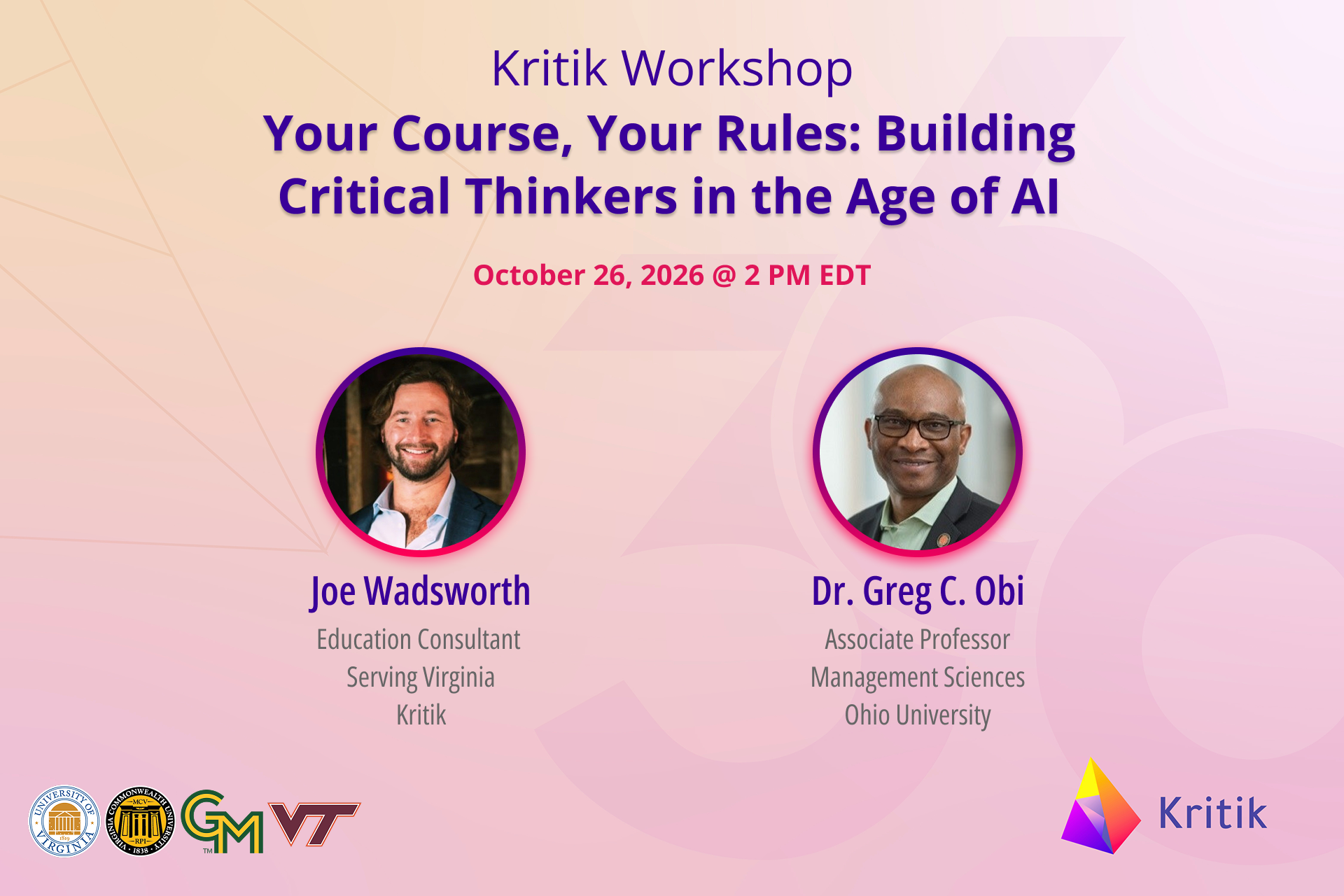
As generative AI in education becomes part of how students learn and complete coursework, instructors face a growing challenge: How do you set clear expectations for AI while strengthening the critical thinking skills employers value most, especially when the National Association of Colleges and Employers lists critical thinking as a top skill?
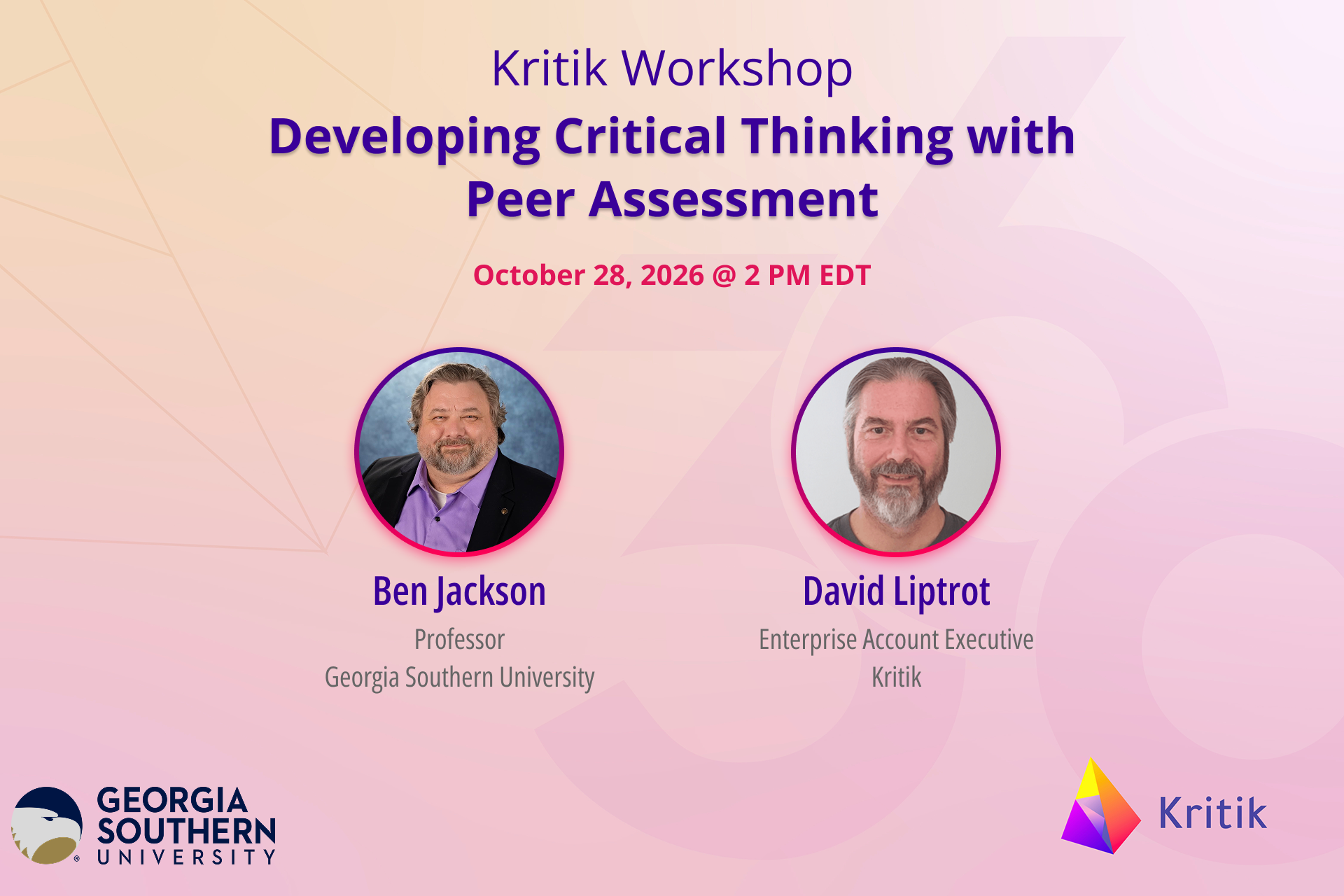
Join Ben Jackson from Georgia Southern University and David Liptrot from Kritik on October 28 at 2:00 PM EDT for Developing Critical Thinking with Peer Assessment, a practical higher education workshop on using peer feedback to deepen student engagement, reinforce course concepts, and make peer learning easier to manage at scale.
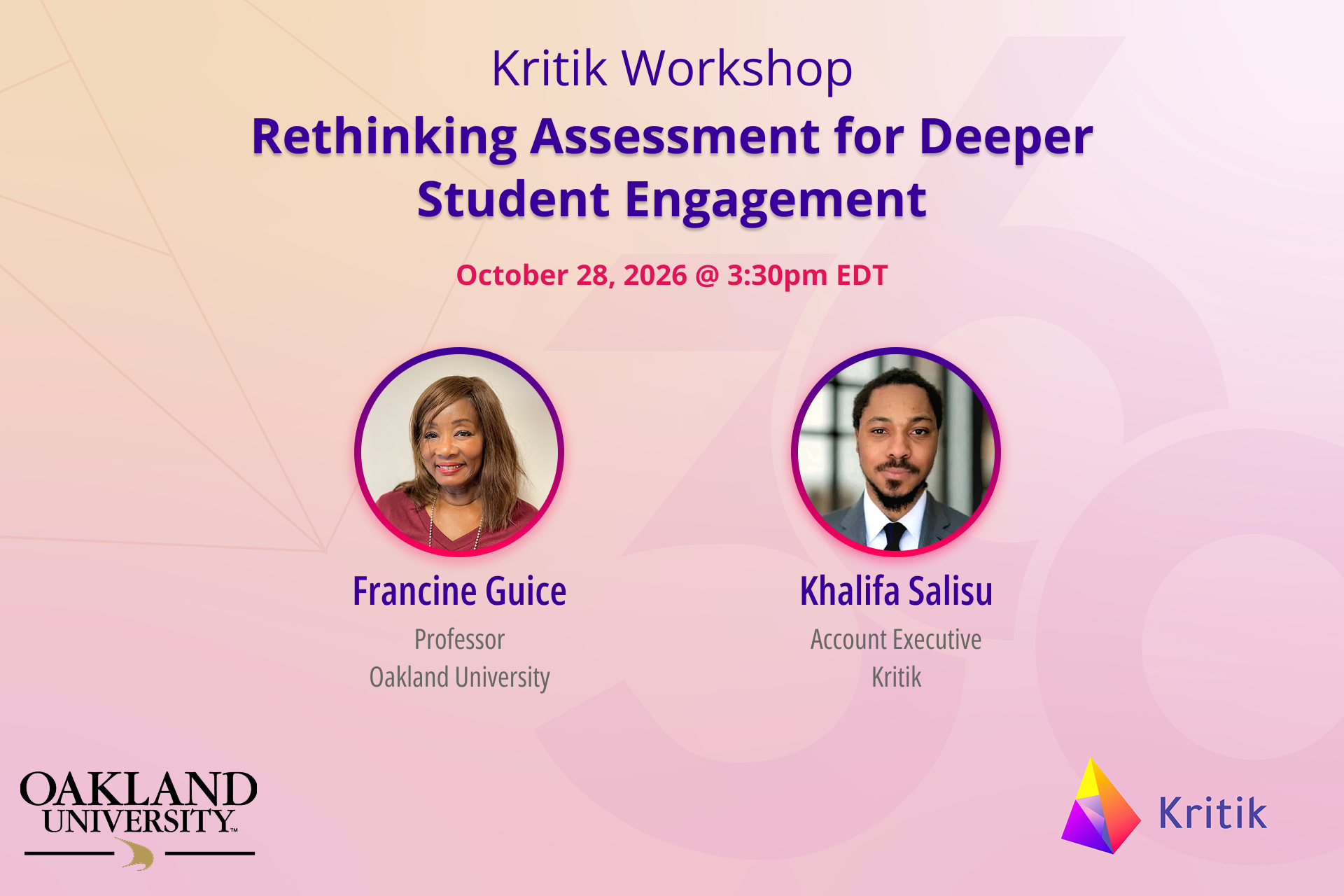
Join Francine Guice from Oakland University and Khalifa Salisu from Kritik on October 28 at 3:30 PM EDT for a practical conversation on how peer review and AI literacy can work together to strengthen critical thinking in higher education.
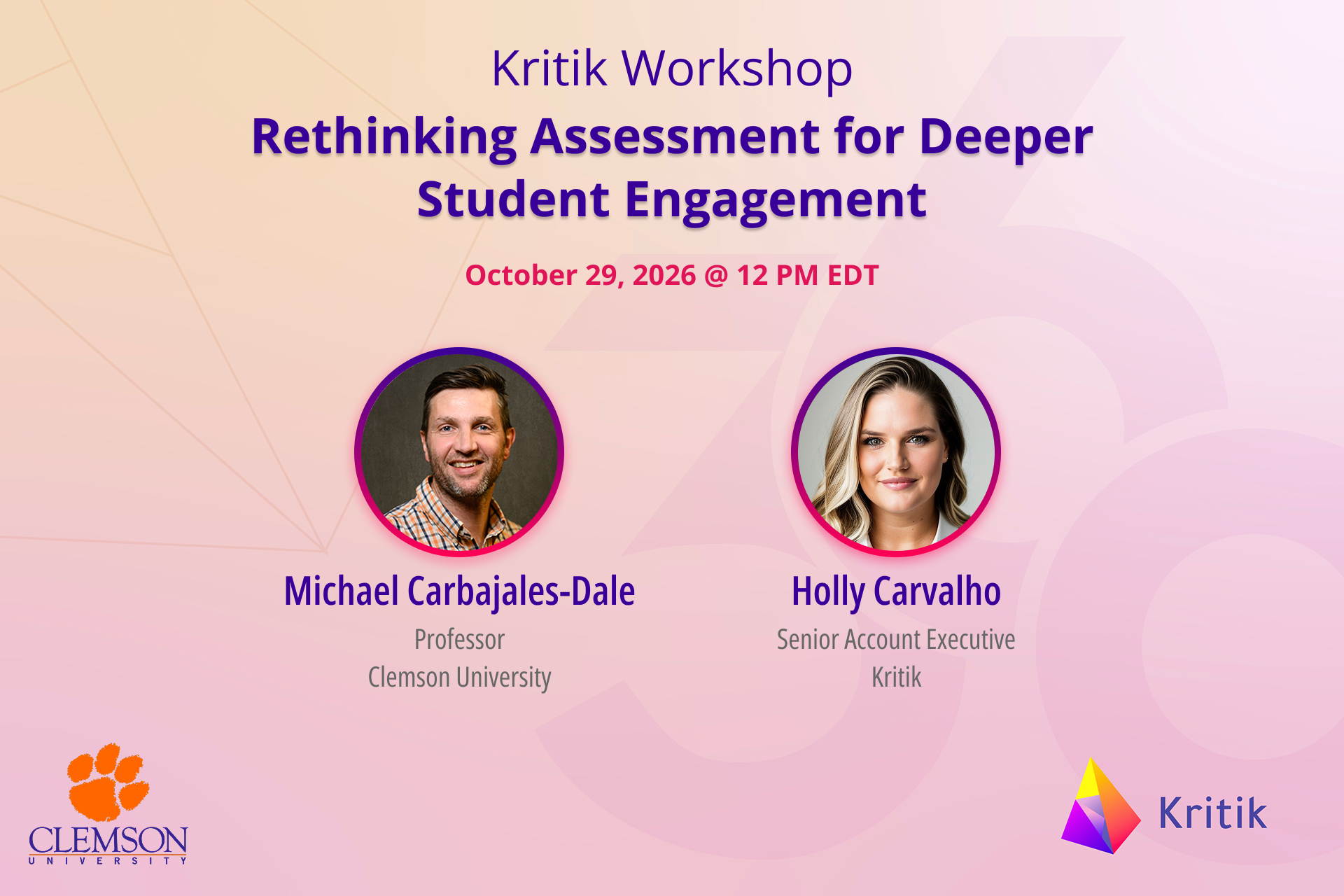
Join Michael Carbajales-Dale of Clemson University and Holly Carvalho from Kritik on Thursday, October 29 at 12:00 PM EDT for a practical conversation on rethinking assessment to create deeper, more active learning experiences.
Join Dr. Scott Johnson, Jared Bowden, and Shayne Sorenson from the BYU–Idaho Department of Chemistry for a faculty-focused Lunch & Learn on how they are using structured writing and peer review to help students become stronger communicators, more thoughtful learners, and better prepared disciple leaders.
Join Dr. Jeffrey Hoch, an award-winning UC Davis professor, for a faculty Lunch & Learn on how he uses Kritik to incorporate peer review into writing assignments, helping students develop stronger critical thinking and communication skills while reducing the time instructors spend grading and providing feedback. Sandwiches and beverages will be provided for in-person attendees. Virtual attendance is also available.
Tywan Martin of the University of Miami and Corinne Santarpia of Kritik came together for a practical conversation on designing learning experiences that strengthen critical thinking, judgment, reflection, and student ownership in an AI-driven world.
In this session, you’ll see how structured peer feedback helps students develop evaluative judgment, communicate clearly, and engage in work that reflects real professional practice.
Check out this interactive session at Dalhousie University, exploring how peer assessment can create more student-centred classrooms while making grading more efficient.
Faculty from York University share how they are able to boost critical thinking, collaboration and communication skills in their students with Kritik360.
Download resources from Prof. Robin Potter's Kritik360 workshop to learn how she scales process-oriented teaching and strengthens critical thinking in her classroom.